
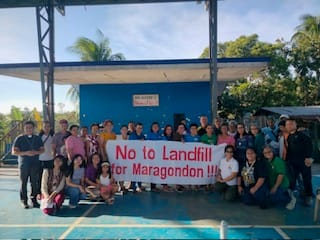
Location: Brgy. Talipusngo, Maragondon, Cavite
Project Area: 64 hectares
Proponent: Prime Integrated Waste Solutions Inc.
Prime Integrated Waste Solutions Inc. (PIWSI), also referred to as Prime Waste Solutions, is a waste management company under Prime Infrastructure Capital Inc., the infrastructure arm of the Razon Group, owned by Filipino business tycoon Enrique K. Razon Jr.. The company was established to acquire and operate landfill-related waste facilities and to develop materials recovery facilities (MRFs) and waste-to-value solutions. It has previously operated landfill-related projects, including the former landfill in Barangay Binaliw, Cebu City.
According to residents, the company has purchased a consolidated 64-hectare property in Barangay Talipusngo, Maragondon, Cavite, where a landfill project is reportedly being proposed.
The Community Consultation
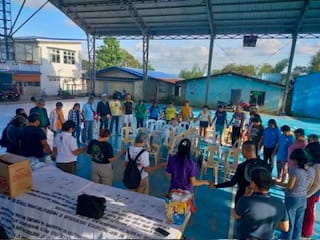
On February 18, 2026, a community consultation was conducted in Barangay Talipusngo. The activity was initiated and organized by a Cavite-based local network composed of faith-based groups, civil society organizations, and non-government organizations. Participating organizations included the United Church of Christ in the Philippines, Diocese of Imus, Diocesan Lay Pastoral, Basic Ecclesial Community, IFI-Maragondon, San Antonio De Padua Parish, Kabitenyong Alyansa Laban sa Seabed Quarrying, Cavite Green Coalition, EcoWaste Coalition, Philippine Rural Reconstruction Movement, Kalikasan People’s Network for the Environment, and Blue Earth Defense PH.
The gathering formally opened with an Ecumenical Service, grounding the discussion in shared moral responsibility, stewardship of creation, and solidarity with affected communities. This was followed by a focus group discussion and structured consultation.
A “Landfill 101” presentation was delivered to help residents better understand:
The technical components of sanitary landfills
The legal processes involved, including permits and compliance requirements
Environmental and public health implications
The history of landfill struggles in Cavite
Representatives from the Cavite Green Coalition shared past experiences where community alliances successfully opposed and closed landfill and dumpsite operations in the province. The objective was to equip residents with both technical knowledge and historical context so they could better understand their rights and the potential implications of the proposed project.
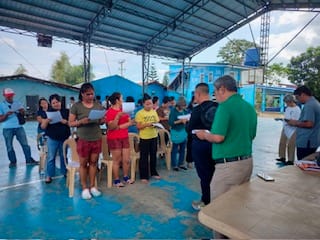
The consultation concluded with an open forum, identification of possible next steps, and a covenant symbolizing unity and collective commitment to protect the community.
Key Concerns Raised by the Community
1. The Land and River as Life Sources
Residents emphasized that the land holds deep meaning, especially for families who depend on farming as their primary livelihood. The area is not merely a parcel of land—it is a source of food, income, heritage, and identity.
The river was repeatedly described as central to daily life. It serves as:
- Drinking water for cows, horses, carabaos, and other animals
- A support system for agricultural activities
- A vital ecological resource in an area situated near mountain ranges, including Mt. Marami
Community members expressed strong concern that landfill leachate or waste runoff could contaminate both surface water and groundwater. Such contamination would directly affect households, livestock, crops, and the broader ecosystem. For many residents, the risk to water is equivalent to a direct threat to survival and long-term livelihood security.
2. Health and Air Quality Concerns
A senior citizen voiced concern that the landfill could produce foul odors and harmful emissions. Residents worried that methane and other gases might negatively affect people, particularly those with pre-existing respiratory or health conditions.
There were also concerns about the potential increase of disease vectors such as flies and rodents. Families already earning below a living wage fear that health complications could further strain their limited resources.
3. Jobs Versus Long-Term Costs
When asked about potential advantages and disadvantages of the project, a resident acknowledged that the landfill might generate employment opportunities. However, this possible benefit was weighed against anticipated environmental degradation and health risks.
Residents noted that prevailing provincial wage rates remain below a living wage. If pollution leads to increased illnesses, medical expenses could outweigh any income earned from landfill-related employment. The discussion highlighted a difficult trade-off between short-term job creation and long-term environmental and health security.
4. Community Response to Corporate Engagement
A Barangay Health Worker shared that when the company invited residents for another round of discussions, no community members attended. This collective absence was widely interpreted as a clear expression of concern and emerging opposition within the barangay.
Community members emphasized that their non-attendance should not be mistaken for indifference or lack of awareness. Rather, it reflected a conscious and unified decision not to legitimize a process they believe may put their land, water, health, and livelihoods at risk. For many residents, the issue goes beyond immediate impacts—it is about safeguarding the well-being of future generations and preserving the integrity of their community.
The Role of Barangay Leadership and the LGU
Barangay and municipal leadership play a crucial role in ensuring that environmentally critical projects are conducted in a manner that safeguards the community’s welfare. Under the Local Government Code (RA 7160), barangay and municipal officials are mandated to promote the general welfare of their constituents, which includes protecting public health, ensuring safe water and agricultural resources, and maintaining environmental integrity.
Leadership at both the barangay and municipal levels is pivotal in facilitating informed and inclusive decision-making. Officials are uniquely positioned to:
- Ensure residents have access to accurate and transparent information regarding the proposed project
- Support consultations that allow the community to voice their concerns and aspirations
- Uphold environmental and public health standards while considering sustainable development goals
The consultation demonstrated that residents are actively engaged and concerned about potential impacts on their livelihoods, water sources, and health. In this context, the guidance of the Barangay Chairman and the support of the Maragondon LGU are essential to ensure that decisions affecting the community are informed, lawful, and reflective of the people’s welfare.
Respectful, proactive, and transparent leadership strengthens community trust and reinforces the LGU’s role as a guardian of constitutional rights, particularly the right to a balanced and healthful ecology (1987 Philippine Constitution, Article II, Section 16).
The True Power of the People
While barangay and municipal leaders have important roles, it is ultimately the community itself that holds the real power. The residents of Barangay Talipusngo are the rights-holders whose lives, livelihoods, and environment are directly affected by any proposed project.
Under Philippine law, communities are not passive observers. Environmental laws such as the Ecological Solid Waste Management Act (RA 9003) and the Environmental Impact Statement System (PD 1586) require meaningful public participation and consent before environmentally critical projects proceed. Public consultation is a legal requirement, and genuine consent cannot be replaced by political influence or corporate power.
The ultimate legitimacy of any development lies in the acceptance and approval of the people themselves. No government official, political figure, or influential businessperson can override the community’s rights or lawful exercise of choice. Social acceptability, informed consent, and collective action are the foundation of sustainable and just development.
The consultation illustrated that residents are aware, engaged, and capable of making informed decisions. Their voices, concerns, and collective will are the true drivers of accountability. Leadership, whether from the barangay or LGU, serves best when it respects, amplifies, and protects this power—rather than replacing or undermining it.
Closing Reflection
The consultation ended with a covenant—a collective commitment to protect the land, water, health, and future of Barangay Talipusngo.
For the residents, the issue is not merely about a landfill. It is about:
- The preservation of agricultural livelihoods
- The protection of water sources
- The health and safety of children and elders
- The dignity and rights of future generations
The community remains concerned but resolute. They understand the magnitude of the challenge ahead. Yet they believe that lawful, peaceful, and collective action grounded in truth, environmental stewardship, and constitutional rights can prevail.
Ultimately, sustainable development must respect not only economic interests but also the rule of law, the collective will of the people, and the long-term welfare of the community.
Discover more from BlueEarthDefense
Subscribe to get the latest posts sent to your email.