
By Bong S. Sarmiento / Mongabay
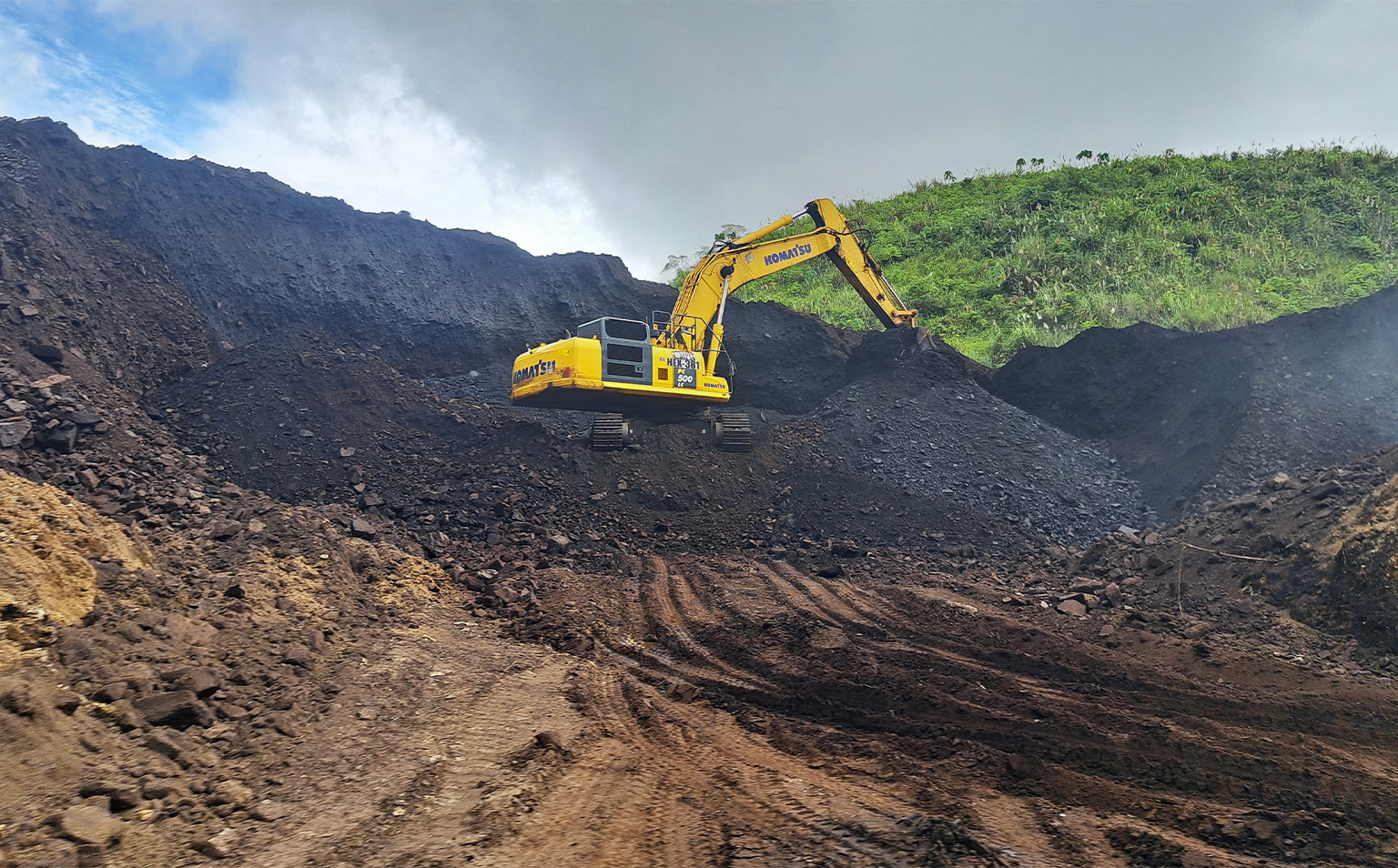
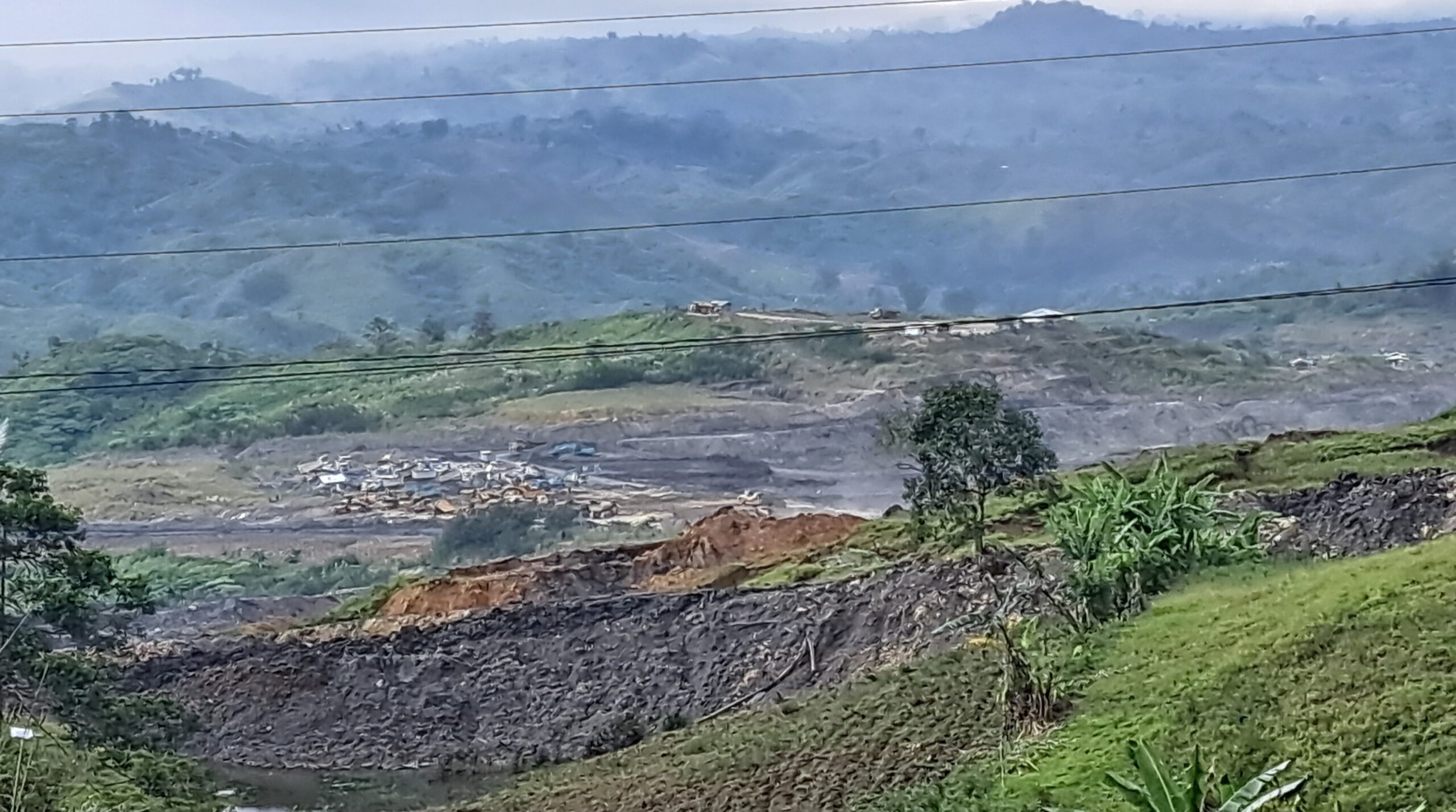
SOUTH COTABATO, Philippines — It’s been three years since production began at a coal mine in the mountain village of Ned, some 1,500 kilometers, nearly 1,000 miles, south of Manila, on the southern Philippine island of Mindanao. Since then, more than 2 million metric tons of deposits have been carved out of the earth, leaving a wide brown scar through land once teeming with green vegetation.
Since operation plans were announced, the mine has faced opposition from local Indigenous residents, farmers, and church and community organizations in the area, citing environmental and health concerns.
A community consultation organized by the regional office of the Commission on Human Rights (CHR), a government agency, in Lake Sebu this September revealed that resistance to the project has only hardened.
Since December 2022, at least three mountainous slopes have reportedly been lost to strip mining. Coal from the mine is loaded onto heavy trucks that damage public roads, cause noise pollution, and leave coal dust pollution behind them. Community members have complained to authorities and the mine operator about the inconveniences and safety and health risks brought by coal mining, while Indigenous residents say they worry about encroachment on their ancestral lands.
Activists have also raised concerns about the lack of transparency surrounding the project, noting that recent revelations make it impossible to know who even owns the companies responsible for the mining.
Ownership obscured
In 2010, San Miguel Corp., one of the largest conglomerates in the Philippines, bought three companies that held mining rights for a combined 17,000 hectares (42,000 acres) in Ned and its surrounding areas: Daguma Agro Minerals, Inc. (DAMI), Sultan Energy Philippines Corp. (SEPC), and Bonanza Energy Resources, Inc. (BERI).
Eleven years later, in December 2021, San Miguel CEO Ramon S. Ang sought the endorsement of provincial authorities to begin strip mining in the Ned concessions. By the last quarter of 2022, the project had roared into commercial production.
All along, the critics and the stakeholders affected by the project thought that San Miguel Corp. was behind the venture.
But the ownership of the mining venture is now unclear.
In separate disclosures to the Philippines’ Securities and Exchange Commission in 2024, San Miguel revealed the sale of DAMI, SEPC and BERI to an undisclosed third party.
“On December 21, 2022, SPI entered into a Share Purchase Agreement with a third party for the sale of its 100% equity interests in DAMI, BERI and SEPC … which was fully paid as at December 31, 2023,” San Miguel said in an offer supplement dated April 22, 2024.
SPI is Sual Power Inc., a subsidiary of San Miguel Global Power Holdings Corp. (San Miguel Global). San Miguel Global, one of the many affiliates of San Miguel Corp, operates some of the Philippines’ biggest coal, gas and hydropower plants.
During the community-based dialogue in September, Cerilo Casicas, bishop of the Catholic diocese of Marbel, which includes Ned, told Mongabay that the web of corporate layers now shrouding the coal mining venture makes it difficult to seek accountability.
“Who shall we [hold to] account about the negative impacts of this mining project? Please stop your operations,” he said.
Casicas has repeatedly warned that the coal mining project threatens food security and agriculture-based livelihood as the venture straddles the 116,451-hectare (287,757-acre) Kabulnan River Watershed and Forest Reserve and the 102,350-hectare (252,912-acre) Allah Valley Watershed Forest Reservation.
Aside from the question of ownership, the coal venture is beset by several other issues, foremost among them the opposition from TAMASCO. A tribal association whose 1,682-hectare (4,156-acre) government-recognized ancestral domain is surrounded by the coal mining tenements, TAMASCO has a long history of resisting corporate incursions of its land.
In Sitio Datal Bonlangon, one of the many hamlets in the village of Ned and part of the TAMASCO ancestral domain, Jeffrey Danyan,28, showed two scars on his abdomen from gunshots wounds he sustained following a military operation on Dec. 3, 2017, in the area.
“I have no more fear. My fear is making me brave to oppose the entry of coal mining in our ancestral land,” he told Mongabay in the local language.
That day, TAMASCO lost its chair, Victor Danyan, and seven other members in what the military claimed was a legitimate operation against communist rebels or sympathizers. Victor had been leading the opposition against the expansion of corporate coffee plantation and the entry of coal mining onto their ancestral land since the early 2000s.
The families and supporters of the victims described their deaths as a massacre, and denied they were communist rebels. According to them, Victor was killed to silence dissent in the area.
Two soldiers were also killed in the incident. Jeffrey was named a suspect in their deaths, and spent nearly five years in prison before being freed due to lack of evidence.
Speaking to Mongabay in September, Jeffrey said members of his clan have sworn to sustain Victor’s defiance against the entry of coal mining into their ancestral domain. Mining, he said, not only threatens to eliminate their farming livelihood but will also displace them from the land occupied by their ancestors since time immemorial.
“For us, land is life. If my life is taken because I’m protecting our land from the claws of mining, so be it,” he said, pointing to the bounty provided to them by the earth through their labor.
Their latest show of resistance is the revival of a land defense occupation tactic called Balik Lasang, a reforestation program. With assistance from the nonprofit Legal Rights and Natural Resources Center, they’ve planted hardwood and fruit-bearing trees on their ancestral land as a symbol of their opposition and as a buffer against the possible encroachment of the coal mining project in their territory. The Balik Lasang effort, which literally means “restoring forests,” currently aims to reforest 6 hectares (15 acres) of trees.
“Our land is not for sale,” Cornelio Melayao, the TAMASCO vice chair, told Mongabay. “By planting these trees within our ancestral land, we are also planting our seeds of opposition to the entry coal mining in our domain.”
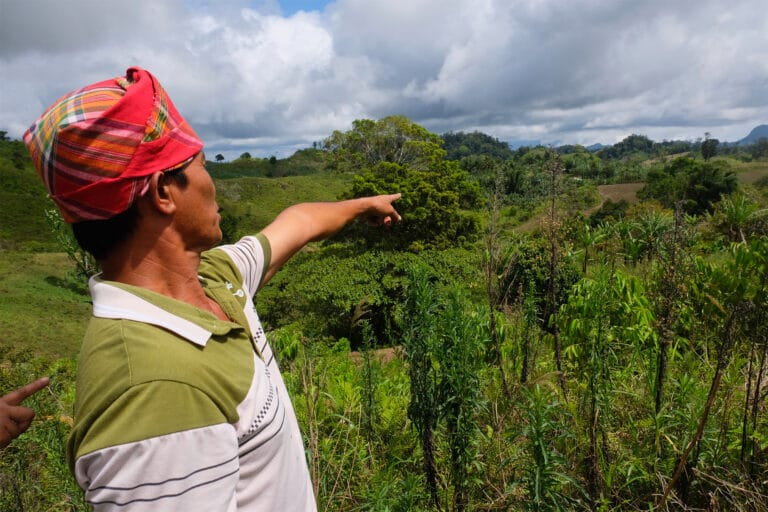
A few kilometers away lies a visibly healthy green patch of native hardwood trees, bamboos and fruit trees that, according to Melayao, the Tboli-Manobo tribal members planted decades ago.
He said the community members are keen on cultivating the young trees to maturity as a symbol of their love for their land and in continued opposition to the coal mining project from encroaching onto their ancestral domain.
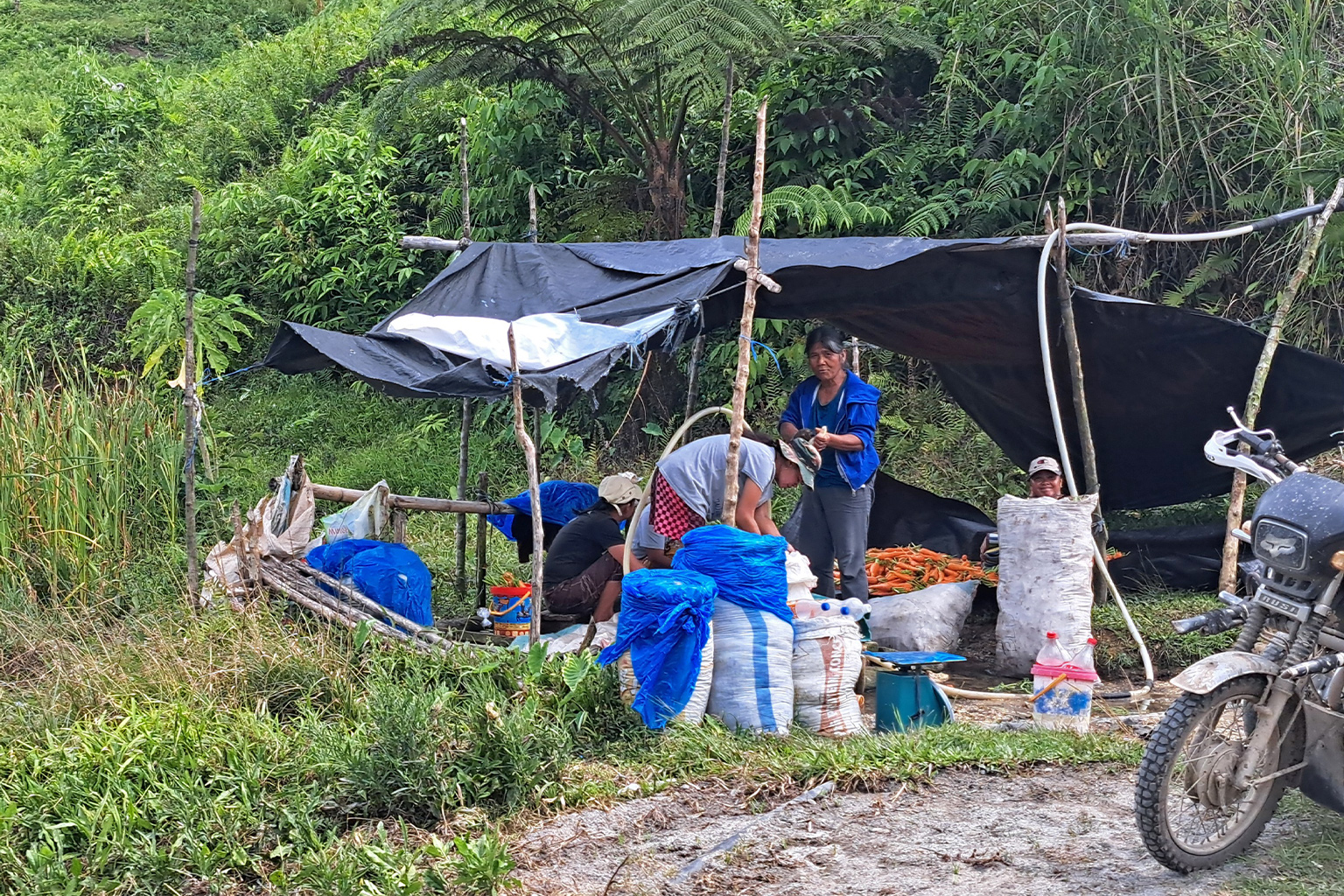
Meanwhile, the mining companies reported that they’ve so far planted nearly 6,000 trees as part of their rehabilitation efforts. This year, they aim to rehabilitate 11 hectares (27 acres), rising to 41.33 hectares (102 acres) in 2026.
According to Department of Energy data, DAMI has extracted at least 2.16 million metric tons of coal deposits since 2023, and SEPC produced 168,424 metric tons, or a total of 2.33 million metric tons. To date, the government has earned at least 125 million pesos (about $2.2 million) from the coal mine, the DOE data show.
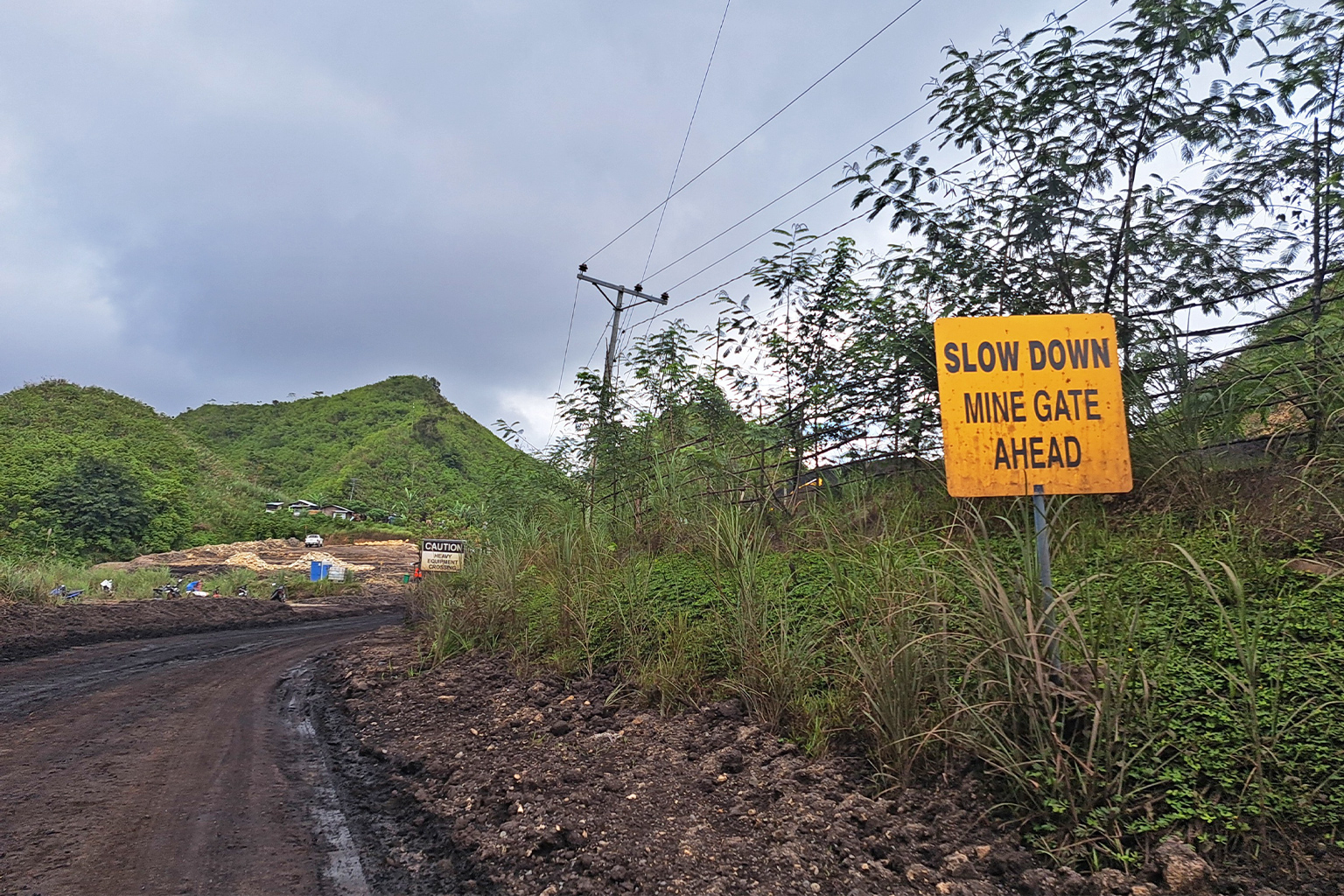
For neighboring villages, the mining operations in Ned became evident in early 2023, with some 100 haul trucks operating daily. According to the DOE, coal from the mine is transported by road to the coastal town of Maitum in Sarangani province, some 50 km (30 mi) away, before being shipped to a coal plant in Malita, Davao Occidental province, operated by San Miguel subsidiary SPI. There, the coal from Ned is mixed with coal imported from Indonesia and fed into the power plant.
Initially, the 30-ton haulers operated around the clock, disturbing the residents living along the road. Following a deluge of complaints, the local government stepped in, imposing a truck ban from 10 p.m. to 4 a.m.
The hauling has taken its toll: there have been 49 accidents reported since 2023, mostly involving motorcycles, the main mode of transportation for residents in this remote mountain village.
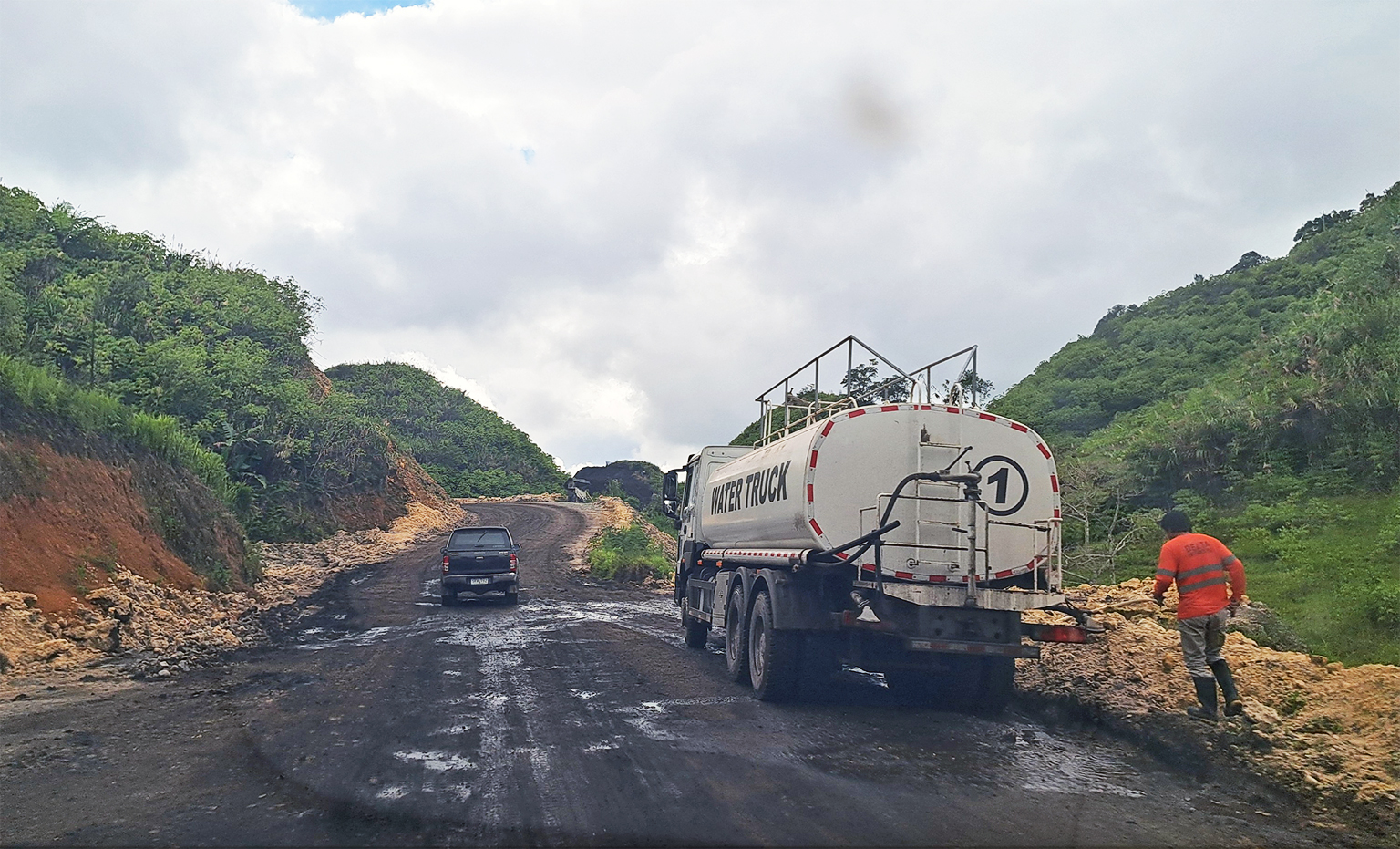
“The road that the trucks traverse daily is mostly in bad shape now,” said Ned village chief Allan Ikan Alam. The mining operators have taken steps to repair the road, but with no other way to bring coal to the port, the damage keeps reappearing.
Besides the noise pollution, residents also complain of coal dust, which the operators address by deploying tanker trucks to spray water along the road.
Mining critics also allege they’ve been surveilled by state operatives, something the military has denied.
A lawyer representing DAMI and SEPC companies declined to grant a media interview about the allegations against the coal mining operations, or to provide information concerning the ownership or shareholder structures of the mining venture. The lawyer cited the need for “clearance from above.”
Fears of expansion
Currently, TAMASCO members are closely guarding against the possibility that the mining operators will open a road expansion of at least 1 km (0.6 mi) that would traverse their ancestral domain. During the community dialogue, company officials confirmed the new road is needed due to tension cracks affecting a section of the existing national highway.
Dande Danyan, the current TAMASCO chair, said they suspect the road expansion might eventually pave the way for the extraction of coal deposits within their ancestral land.
“Any mining or related activities that will be conducted within our ancestral land should undergo the free, prior and informed consent [FPIC] process,” he told Mongabay, an assertion backed by the regional office of the National Commission on Indigenous Peoples.
Jeffrey Danyan, who survived the 2017 “massacre,” vowed that his clan wouldn’t waver in their opposition to any incursion by the coal mining operations onto their ancestral land. He cited not only the bloodstains left by the killings of their kin eight years ago on their land, but also the legacy of their ancestors that the “land will provide the needs of the succeeding tribal generations if there is proper stewardship.”
“It is our duty to protect the environment in our ancestral land,” he said. “As Indigenous peoples, our lives, including our livelihood, largely depend on it,” he said.
Banner image: Datu Cornelio Melayao points to a patch of greenery tribal members reforested decades ago. Image by Bong S. Sarmiento for Mongabay.
Discover more from BlueEarthDefense
Subscribe to get the latest posts sent to your email.