
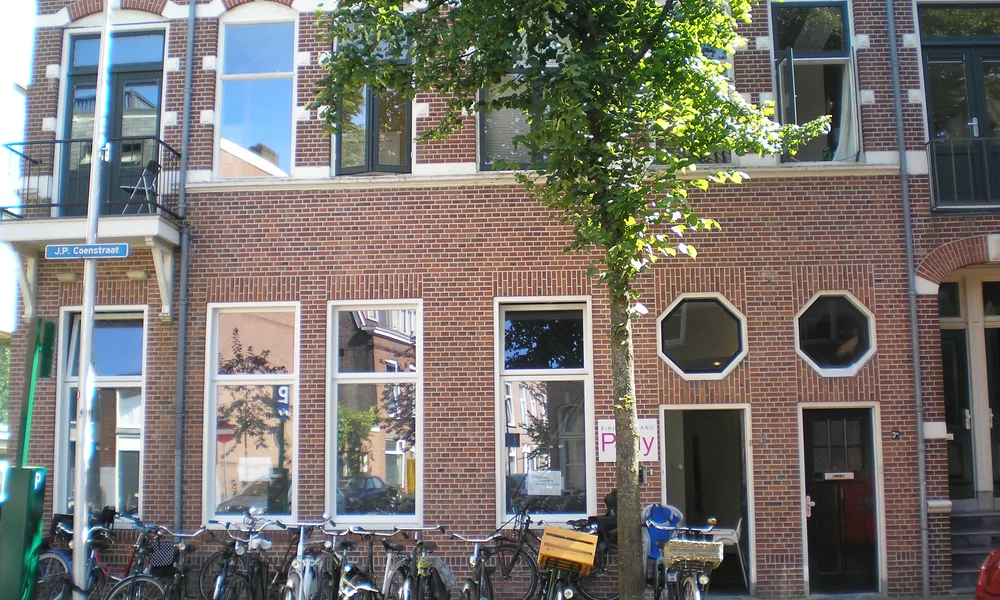
By Isa de Fluiter / diggit magazine
In recent years, heritage practices across Europe are being looked at more critically as people try to come to terms with their colonial history. In the Netherlands, this awareness has become visible especially in urban spaces, where streets, monuments, and buildings continue to have the names of colonial figures. A key example is the Coenstraat in Utrecht, named after Jan Pieterszoon Coen, a 17th-century governor-general of the Dutch East India Company. Even though the official name is Jan Pieterszoon Coenstraat, it is commonly shortened to Coenstraat in everyday use; this article uses this short version. While Jan Pieterszoon Coen was once praised for his contributions to Dutch trade, he is now criticized for his violent campaigns in Indonesia, including the 1621 massacre in the Banda Islands (Historibersama, n.d.). The controversy surrounding Coenstraat embodies the larger struggle over how postcolonial societies remember their past. The controversy reveals a divide as some people view the street name as an important reminder of Dutch history, while others see it as a glorification of colonial violence. This debate covers different areas on issues starting from national identity to the politics of memory. Utrecht’s multicultural population, including communities with ancestral ties to former colonies, has played a key role in bringing attention to the symbolic violence of honoring figures like Coen in daily environments. As Dutch cities claim their aim is to become more inclusive, public space becomes a site of conflict for competing narratives of the past. Dutch cities try to explore how colonial history is remembered in public spaces, yet street names like “Coenstraat” have become sites of conflict and debate.
This paper will explore how the controversy surrounding Coenstraat in Utrecht reflects broader tensions in heritage, memory, and identity. Thus, it poses the research question: What arguments are presented in the public debate around the contested name of Coenstraat in Utrecht, which stakeholders are involved, and how are these arguments prioritized or marginalized in shaping urban heritage policy?Back to top
The Politics of Remembering: Key Concepts to Navigate the Debate
To address the research question, three key concepts are particularly useful: contested heritage, public memory, and stakeholder power dynamics. Together, these concepts help to unpack both the symbolic and political layers of the Coenstraat controversy and they reveal the underlying tensions about what and who is remembered in public space.
The first key concept, ‘contested heritage’, captures the tension around preserving versus challenging commemorations of colonial history. Coenstraat, named after a colonial figure implicated in violent campaigns, has become a focal point for critique. As Harrison (2013) explains, heritage is not a neutral or static collection of facts, but a dynamic set of practices and symbols subject to ongoing reinterpretation. In this context, contested heritage provides a framework for understanding why Coenstraat, despite being “just” a street name, has triggered such strong emotional and political reactions. It shows how everyday spaces carry deeper meanings and how debates over these spaces are not merely about history, but also about the kind of society people want to live in today.
Secondly, the concept of ‘public memory’ provides further insight into how societies remember, forget, and narrate their past through urban symbols like street names. According to Bodnar (1992), public memory emerges from a tension between official narratives and grassroots, vernacular interpretations of history. Coenstraat shows how divided views can be — some people see it as a piece of Dutch history, while others feel it tells only one side of the story that ignores the voices and experiences of those who were colonized. Therefore, public memory is not only about what is remembered, but also about who gets to do the remembering and whose stories are considered worthy of public acknowledgment. In this case, the street names function as a daily reminder of a painful colonial legacy for some, while for others it remains a normalized and often unnoticed part of the city, as many people move through urban spaces without actually reflecting on the street names. This imbalance reveals how public memory is shaped by power — often by authority — to make decisions over and frame history in ways that reflect their own particular values and interests.
Finally, ‘stakeholder power’ dynamics help to identify which figures influence public heritage debates and help to understand how their voices are amplified or marginalized. As Waterton and Smith (2010) argue, heritage practices are shaped by struggles over authority, legitimacy, and representation. In the debate over Coenstraat, city officials, activist groups, heritage experts, and everyday citizens all have a say, but some voices carry more weight than others when it comes to deciding how the past is remembered in public spaces. Understanding these power imbalances is key to assessing how heritage decisions are ultimately made and whose perspectives are prioritized.
These three interlinked concepts form the theoretical foundation for analyzing the Coenstraat debate. They help us grasp the deeper meaning behind the controversy, follow how memory and identity are shaped in public spaces, and further explore the power dynamics that influence heritage policy and practices in the Netherlands.Back to top
Voices in the Street: Whose History Shapes Public Space?
The debate over Coenstraat includes a variety of stakeholders, each with their own interests and interpretations of its meaning. Municipal authorities, such as the City of Amsterdam, have taken steps toward critical reflection by initiating discussions about street names and launching educational programs (Lomax, 2020). However, official action has often been slow and cautious, reflecting concerns about political backlash or legal complications. Urban heritage policy in the Netherlands is decentralized, with municipal councils holding decision-making authority on issues like renaming (Council of Europe, n.d.). These policies often exist in practice rather than as a formalized legislation, which leaves room for interpretation and negotiation. Decisions on these topics are typically informed by heritage advisory boards, city planning departments, and local consultations. This means that policymaking is shaped by a combination of institutional structures, public sentiment, and political will. Activist groups like De Grauwe Eeuw and Decolonize the Museum have taken a more confrontational stance (Museums Association, n.d.), calling for the removal or the renaming of Coenstraat as part of broader decolonial efforts. They argue that continuing to honor Coen perpetuates colonial violence and marginalizes the experiences of colonized people.
As a result, activist voices may generate discussion but they have limited influence, unless they align with formal policy making structures.
Heritage professionals and academics tend to advocate for contextualization rather than erasure. As Azaryahu (1996) notes, street names are not just geographic labels, but they are loaded with political meaning as well. In the case of Coenstraat, the continued use of Coen’s name is seen by critics as sustaining a white, Eurocentric view of history, while defenders argue for historical continuity and education. Heritage professionals and academics plead in favour of installing educational plaques that inform the public about Coen’s role in colonial history. This middle-ground approach aims to balance historical integrity with critical engagement. However, the general public often remains divided. Some communities see the name as part of the city’s history and they worry that changing it would erase heritage. Others, particularly younger and more diverse generations, support renaming as a way to align public space with present-day values of inclusion and justice. Burch-Brown (2017) emphasizes the emotional and ethical complexities that underlie these debates. Renaming efforts must grapple with diverse emotional attachments, the need for historical justice, and respect for multiple perspectives.
It is important to see that the way these arguments are received and acted upon is shaped by the structure of urban heritage policy. Local governments, like Utrecht’s city council, have the authority to rename streets, but such decisions involve complex consultations with advisory boards, heritage committees, and community stakeholders. This decentralization means that what actually happens often depends on the priorities of local politicians, how much pressure comes from the public (Eg. protests or campaigns), and how slow or resistant institutions are to change. As a result, activist voices may generate discussion but they have limited influence, unless they align with formal policy making structures. Heritage professionals, while respected, often serve in an advisory role rather than a decision-making one. Back to top
Who Gets to Remember? Power, Resistance, and the Future of Heritage
The Coenstraat debate illustrates the difficulty of transforming colonial heritage in a society that still grapples with its imperial past. The controversy also highlights how public memory is shaped by unequal power relations. Although calls to decolonize heritage are becoming more common, official institutions are still slow and careful, often sticking to traditional approaches. This case also shows how heritage debates are not only about history, but are also about identity and belonging in the present. For descendants of colonized peoples, the continued honor of colonial figures can be alienating and marginalizing. For others, keeping historical names is seen as a crucial aspect to preserve a clear and unified national story. As Barsalou and Baxter (2007) argue, the process of memorialization is just as important as the outcome. When heritage debates are inclusive, they can help bring people together, get the public involved, and make room for a wider range of national stories. But if these debates are controlled by elites or institutions, they can end up excluding others or causing pushback.
Coenstraat thus becomes a symbol of broader tensions in contemporary Dutch society: between inclusion and tradition, justice and preservation, remembering and forgetting. The controversy over Coenstraat reveals how colonial heritage continues to shape urban space and public memory in the Netherlands, often in ways that provoke discomfort and debate. By examining the arguments of different stakeholders and the dynamics of power between them, we see how contested heritage is navigated through negotiation, resistance, and compromise. Additionally, each voice brings their own vision of what the public should represent. The structure of urban heritage policy plays a decisive role in shaping which arguments are heard, which are sidelined, and ultimately, which version of history is commemorated. Municipal governments, heritage professionals, and advisory committees often hold institutional authority in these decisions, while community advocates still struggle for equal recognition in formal processes. Arguments rooted in community-based knowledge are often deprioritized in favor of expert or legalistic frameworks, reinforcing existing hierarchies of legitimacy. This reveals how heritage policymaking is not neutral, but deeply political. Such heritage policymaking concerns whose perspectives are granted influence, which often depends on their access to power or public visibility. As such, Coenstraat serves not only as a case study in historical memory, but also as an index of whose claims to the city are validated—and whose claims continue to be marginalized.Back to top
The Weight of a Name: Heritage, Power, and Possibility
In conclusion, the Coenstraat debate is more than just a dispute over a street name. It is a screenshot of the larger struggle over how postcolonial societies should confront and remember their pasts, especially in contexts where colonial legacies still shape the physical and symbolic landscape of daily life. The questions surrounding whose history is celebrated in public spaces, who gets to make decisions about that history, and how these decisions shape national identity, are central to this issue. These crucial questions echo wider global movements to reassess monuments, street names, and other commemorative practices tied to colonial violence and oppression. The way in which these debates are handled — through consultation, protest, education, and policy — will ultimately determine the extent to which the Netherlands, and other postcolonial societies facing similar questions, can move towards a more inclusive and a better understanding concering their colonial legacies, rather than maintaining selective or filtered versions of the past. The Coenstraat controversy underscores that memory, identity, and power dynamics must be carefully navigated to ensure that all voices are heard and that history is remembered in ways that reflect the diversity of multiple experiences and perspectives within society, including those that have long been excluded from the dominant historical narrative. This case illustrates how even small aspects of urban infrastructure can carry heavy symbolic weight, influencing not just how history is remembered, but how communities experience being seen, valued, or erased within the broader social framework.Back to top
References
Azaryahu, M. (1996). The power of commemorative street names. Environment and Planning D: Society and Space, 14(3), 311–330. https://doi.org/10.1068/d140311
Barsalou, J., & Baxter, V. (2007). The urge to remember: The role of memorials in social reconstruction and transitional justice. United States Institute of Peace. https://www.usip.org/sites/default/files/resources/sr_005.pdf
Bodnar, J. (1992). Remaking America: Public Memory, Commemoration, and Patriotism in the Twentieth Century. Princeton University Press. https://doi.org/10.2307/j.ctv131bw3q
Burch-Brown, J. (2017). Is it wrong to topple statues and rename schools? Journal of Political Theory and Philosophy, 1, 59–88. http://jptp.online/is-it-wrong-to-topple-statues-and-rename-schools/
Council of Europe. (n.d.). Heritage legislation: Netherlands. HEREIN System. http://www.herein-system.eu/heritage-legislation-netherlands
Harrison, R. (2013). Heritage: Critical Approaches. Routledge.
Historibersama. (n.d.). The massacre of the Bandanese – Tirto. Retrieved April 14, 2025, from https://historibersama.com/the-massacre-of-the-bandanese-tirto/
Lomax, E. (2020, July 6). Decolonising museums: The new network opening up the diversity debate in the Netherlands. The Art Newspaper. https://www.theartnewspaper.com/2020/07/06/decolonising-museums-the-new-network-opening-up-the-diversity-debate-in-the-netherlands
Museums Association. (n.d.). Decolonising museums. https://www.museumsassociation.org/campaigns/decolonising-museums/
Waterton, E., & Smith, L. (2010). The recognition and misrecognition of community heritage. International Journal of Heritage Studies, 16(1–2), 4–15. https://doi.org/10.1080/13527250903441671Back to top
Discover more from BlueEarthDefense
Subscribe to get the latest posts sent to your email.