
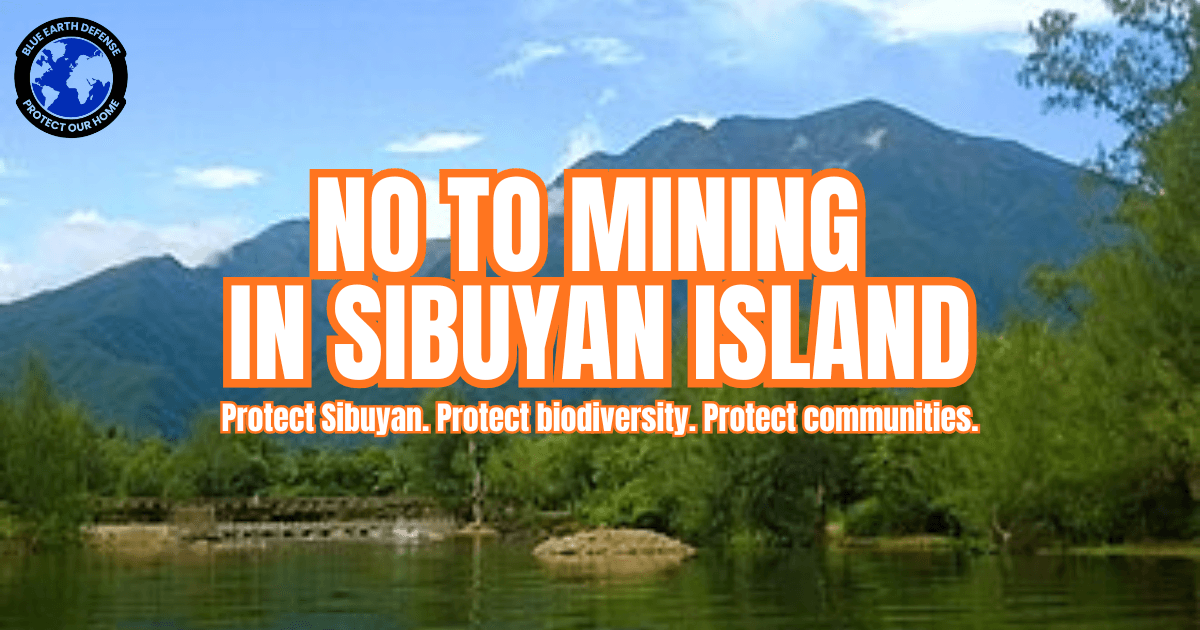
Blue Earth Defense – Global strongly condemns the endorsement of the proposed nickel mining project on Sibuyan Island by the Municipal Council of San Fernando, Romblon.
At a time when communities around the world are facing escalating climate, biodiversity, and livelihood crises, it is deeply alarming to see decisions that prioritize extractive industries over the well-being of people and nature.
Sibuyan Island, often recognized as the “Galapagos of Asia,” is home to irreplaceable ecosystems, endemic species, vital watersheds, and communities whose lives and cultures are intrinsically connected to the land. These are not expendable resources—they are living systems that sustain present and future generations.
We firmly believe that the safety, health, livelihoods, and rights of local communities must always come before destructive development projects. No promise of economic gain can justify the irreversible damage that large-scale mining can inflict on forests, rivers, biodiversity, and community resilience.
We stand in solidarity with the people of Sibuyan Island, environmental defenders, fisherfolk, farmers, and all those peacefully protecting their homes and ecosystems. Their voices deserve to be heard, respected, and protected, not sidelined in favor of corporate interests.
Blue Earth Defense – Global calls on government authorities to uphold environmental justice, strengthen the protection of biodiversity, and pursue development pathways that are community-centered, ecologically responsible, and rooted in long-term sustainability rather than short-term extraction.
Protect Sibuyan. Protect biodiversity. Protect communities. People and nature over profit. Always.
Blue Earth Defense – Global
FILM SCREENING & DISCUSSION FORUM!
Bright Green Lies: Exposing Greenwashing and the State of Renewable Energy in the Philippines
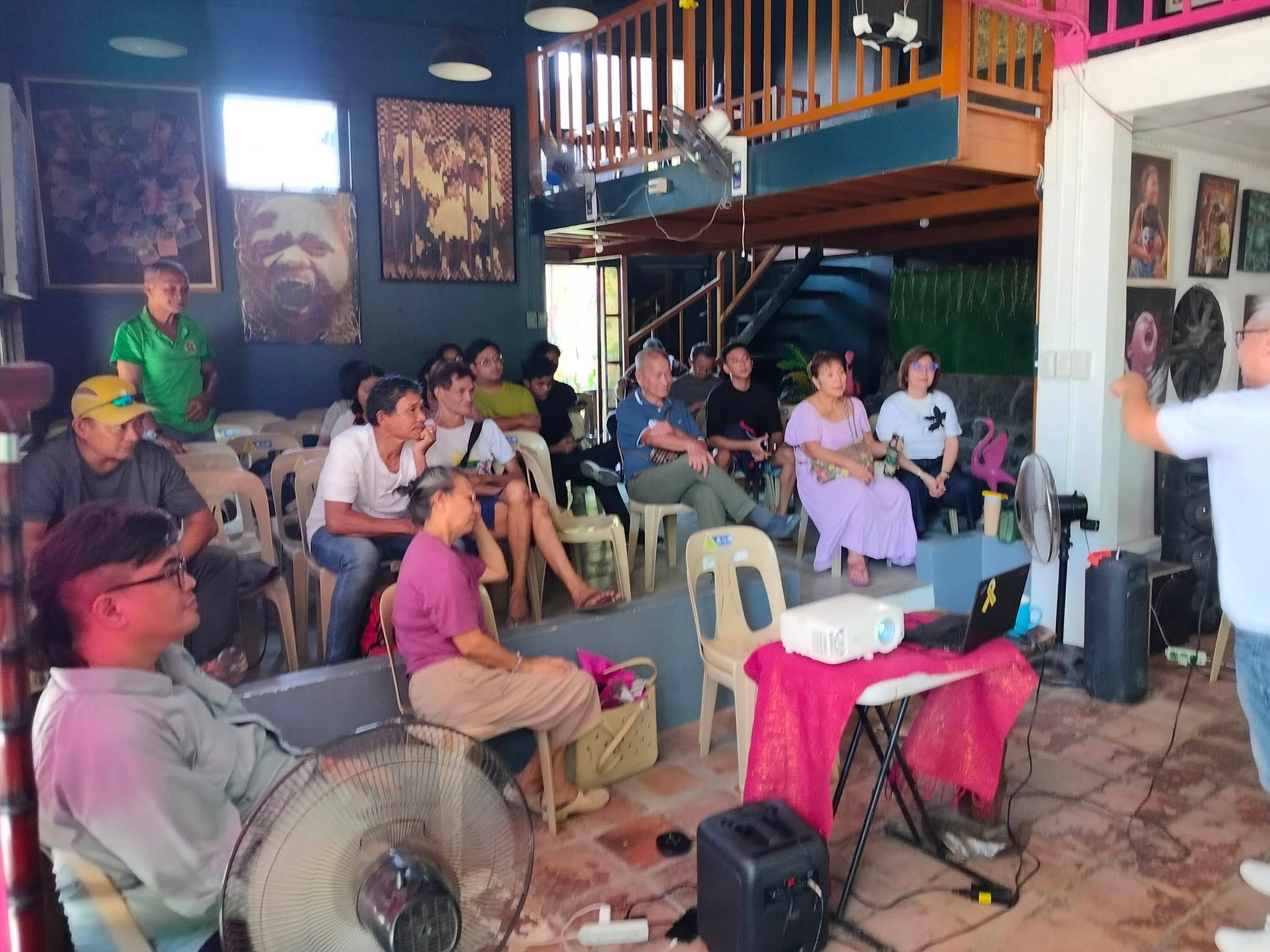
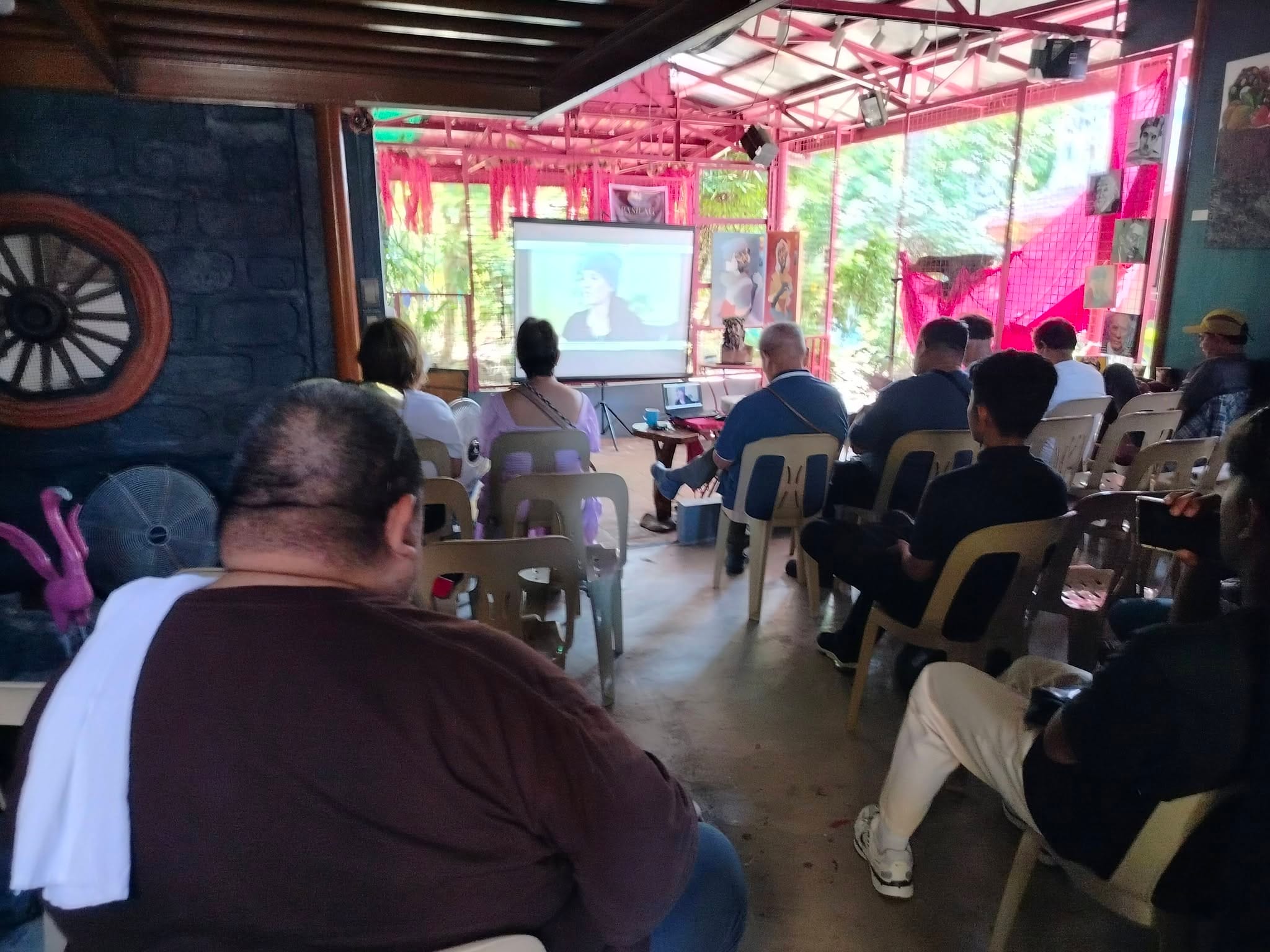
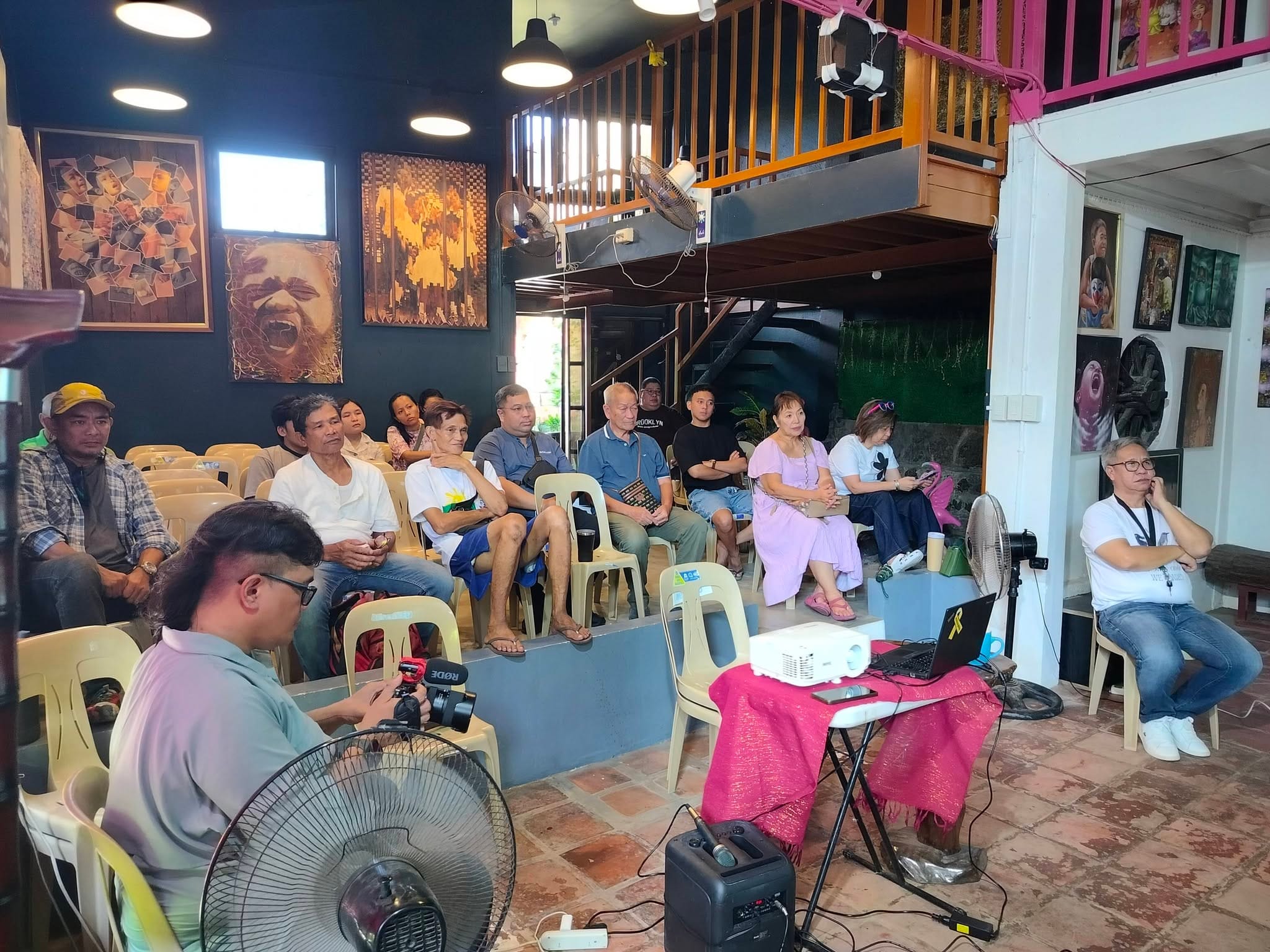
Activity Summary
The program began with the screening of the documentary Bright Green Lies, followed by an open discussion where participants reflected on the film’s relevance to the current situation in Laguna Province.
The discussion highlighted that several hydropower, wind energy, and solar energy projects have already been approved by the Department of Energy for development within the province. Participants explored the potential ecological and social impacts of these projects, particularly on watersheds, forests, biodiversity, freshwater ecosystems, and the livelihoods of communities that depend on these natural resources.
Representatives from various municipalities shared local observations and emphasized the importance of ensuring that communities have access to accurate information, meaningful public participation, and transparent decision-making processes regarding large-scale energy developments.
One of the most significant moments of the discussion came from a youth participant, who asked:
“Who really benefits from projects like the Ahunan Hydropower Project?”
This question sparked an engaging dialogue among the participants. The discussion examined how electricity generated from large-scale energy infrastructure is often intended to serve growing industrial, commercial, and urban demand through the national power grid, rather than being developed primarily to address the immediate energy needs of nearby host communities. Participants reflected on how local communities frequently bear many of the environmental and social impacts associated with these projects while the broader economic benefits are often realized elsewhere.
The conversation reinforced the importance of critically examining not only the environmental impacts of energy projects but also questions of equity, accountability, and who ultimately benefits from large-scale infrastructure development.
Key Discussion Highlights
- ● Participants discussed the increasing number of renewable energy projects proposed and approved within Laguna Province.
- ● The forum encouraged critical reflection on balancing energy development with environmental protection and community well-being.
- ● A youth participant’s question—“Who really benefits from the Ahunan Hydropower Project?”—became a central point of discussion, prompting participants to examine the intended beneficiaries of large-scale energy infrastructure.
- ● Participants noted that while host communities often experience the environmental and social impacts of these developments, the electricity produced by large-scale projects is generally integrated into the national grid to meet broader industrial, commercial, and urban electricity demand, rather than being dedicated exclusively to surrounding communities.
- ● The discussion emphasized the importance of transparency, meaningful community participation, and equitable consideration of both the benefits and impacts associated with major energy projects.Note from the Organizing Director:If your community is facing the impacts of hydropower, wind, solar, or other so-called “renewable energy” projects and wants to better understand the process, community rights, and the legal frameworks involved, we are open to organizing a film screening and community discussion in your area.We believe that many large-scale climate mitigation projects, promoted under the banner of “green” and “clean” energy, continue to follow the same extractive model, prioritizing industrial growth and endless consumption while placing the social and environmental costs on local communities.Through education, dialogue, and solidarity, we can better understand these issues, share experiences, and strengthen community-led responses.If your organization or community is interested, send us a message. Let’s learn, organize, and build solidarity together.
Discover more from BlueEarthDefense
Subscribe to get the latest posts sent to your email.