
The Global Shockwaves of the Iran–Israel–US Conflict
When bombs fall in the Middle East, the world feels it — not just through news reports, but in skyrocketing energy bills, rising food prices, and environmental destruction. Today’s wars don’t stay local. They ripple across continents, hitting economies, ecosystems, and future generations.
“War today is not just about borders. It’s about systems — and the planet is paying the price.”
This analysis builds on our Position Paper on War: The Machinery of the State and Industrial Civilization, which examines how war is not inevitable but a product of the state and extractive industrial systems. The current conflict between Iran, Israel, and the United States is a striking example of these dynamics in action.
Energy Prices Gone Wild
The Strait of Hormuz — a narrow chokepoint carrying 20% of global oil and gas — has become a geopolitical flashpoint. The result? Oil prices are above $100 per barrel, and natural gas and electricity costs are soaring in Europe and Asia.
This isn’t abstract — it’s households paying more for heat, businesses struggling to operate, and food prices climbing globally. Energy shocks are no longer confined to conflict zones; they hit everyone.
Inflation, Food, and Global Hardship
Higher energy prices ripple quickly through transportation, fertilizer production, and shipping, driving up food costs everywhere.
Poorer populations are the first to feel the impact. Rising prices for basic needs aren’t just numbers — they’re hunger, instability, and deepening inequality.
“Even if you live far from the battlefield, the war is taxing your wallet and your plate.”
The Renewable Energy Paradox
High fossil fuel costs push a rush toward renewables: solar, wind, and batteries. Sounds good, right? Cleaner energy, lower emissions?
Not so fast. Renewable technologies depend on massive mining operations for lithium, cobalt, nickel, copper, and rare earths. And mining isn’t gentle: deforestation, water pollution, habitat destruction, and displacement of local communities are the hidden costs.
“Green energy has a dirty secret!”
Mining, Corporations, and the Planet
Here’s the truth the mainstream often misses: the system fueling this crisis is designed to benefit corporations, states, and global elites, not people or the environment.
- Corporations profit from energy shocks and push alternatives that often create new environmental burdens.
- States use war and energy control to maintain geopolitical dominance.
- Elites consolidate wealth and influence while ordinary people shoulder the human, economic, and ecological cost.
“The war, the price spikes, and the scramble for renewable resources are all symptoms of a system that prioritizes power and profit over sustainability, equity, or life itself.”
A Global Feedback Loop
- War disrupts energy supplies
- Energy prices spike globally
- Inflation and the cost of living rise
- Renewable energy adoption accelerates
- Mining demand skyrockets
- Environmental and social damage mounts
- Corporations, states, and elites profit
- Inequality and ecological strain deepen
It’s not just a conflict — it’s a self-reinforcing global system that threatens both present and future generations.
The Takeaway
The Iran–Israel–US war isn’t only killing people on the battlefield. It’s inflating costs, destabilizing economies, degrading ecosystems, and jeopardizing the future of life on Earth.
The lesson from both the current crisis and our Position Paper on War is clear:
We cannot achieve peace, equity, or sustainability while the machinery of the state and industrial civilization continues to prioritize extraction, power, and profit.
The planet isn’t just collateral damage. It’s a warning — a signal that our systems of war, extraction, and elite control must be fundamentally challenged.
This article was compiled using publicly available data by Ja Guila.
References
https://blueearthdefense.org/war-the-machinery-of-the-state-and-industrial-civilization/
Reuters: Iran war’s energy impact
The Diplomat: ASEAN calls for halt to Iran war
The Guardian: CO₂ emissions from military conflicts
CarbonBrief: War and energy transition
IRENA: Critical minerals and energy transition
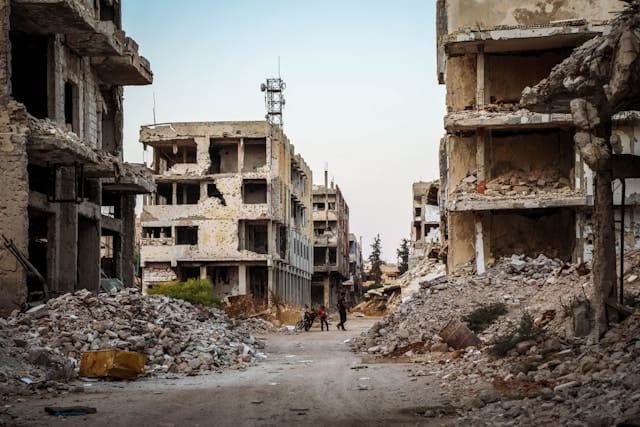
Photo by Mahmoud Sulaiman on Unsplash
Discover more from BlueEarthDefense
Subscribe to get the latest posts sent to your email.